
The red poppy is a symbol that we are all familiar with. From political figures to almost anyone that appears on British television, the red poppy has become part of the unwritten November uniform rule. For the general public, that’s me and you, it hasn’t quite got to the point of ‘poppy fascism’ like it has in the media in that we aren’t (often) criticised or even abused for not wearing one (more on this later). We have a choice, the majority respect that choice, and those that I encounter choose to wear a red poppy for a variety of reasons.
The red poppy (or ‘Remembrance poppy’) came about after the First World War and has been worn at the relevant time each year to this day in commemoration of the British military that have died in action. As I was taught from a very early age, the wearing of a poppy was inspired by the resilient flowers that continued to grow on the battlefield despite the bombs and destruction that had taken place there. Starting with the famous poem ‘In Flanders Fields’, the poppy production grew from a small independent business to what we know today as the ‘Poppy Appeal’.
A red poppy can be purchased via The Royal British Legion’s ‘Poppy Appeal’ website with an open donation. The RBL website states that: “we help members of the Royal Navy, British Army, Royal Air Force, Reservists, veterans and their families all year round. We also campaign to improve their lives, organise the Poppy Appeal and remember the fallen.” The money raised through the red poppy donations supports all current and former British military personnel. To read more about the RBL, click here.
Like many others, I choose not to wear a red poppy in November. I have thought a lot about writing this blog post for many years, creating drafts that are never published in fear of saying the wrong thing. In the past, I did not consider that in the First World War, soldiers were conscripted to battle. I did not understand that there are a variety of complex sociological reasons why a person may choose to join the army beyond wanting to kill. I did not reflect on how my words hurt others when trying to explain my reasoning. I was never very good at that sort of thing. I remember being in my form room in secondary school when a group of classmates were collecting donations for red poppies. When they arrived at my table with hands held out expectantly, I looked up from my book and quite simply said “no thank you”.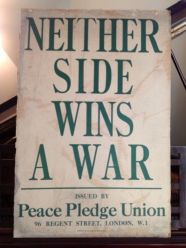
The girls responded with: “what do you mean, no thank you? You have to buy a poppy! We are all wearing one.”
I remember my face going bright red (as it often did when talking to ‘popular’ and intimidating peers who were usually in charge of this sort of thing) and squeaking out something along the lines of: “I don’t support war, I’m a pacifist”.
I don’t think I was much older than 14. I hadn’t thought about the whole thing in too much detail and probably didn’t understand the reasoning beyond repeating the arguments I’d heard from other people. I think many of us thought we were a ‘pacifist’ when we were younger, that there was always an alternative to war and death. Nowadays, with everything that’s going on in the world, I’m not so sure. Despite this, I’m proud of my younger self for having the confidence to stand up for what I believed in. Looking back, however, it probably wasn’t worth the backlash I received from my class (which again probably had no deeper meaning beyond supporting what they had heard was the ‘right’ thing to do, i.e. wearing a red poppy). In retrospect, I could have just pretended I didn’t have any money on me.
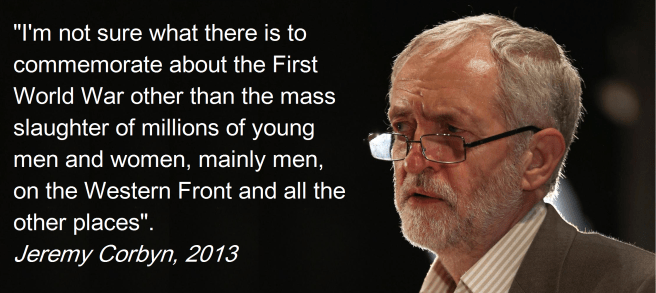
A lot of people say to me: “how is wearing a red poppy supporting the war? I wear the red poppy in remembrance of our soldiers who fought and died for us.”
The message of remembrance behind the red poppy cannot be questioned. The thought of these people being murdered and the families and friends who mourn the sudden loss breaks my heart. This is only intensified with my frustration surrounding war; the battles our armies fight today are avoidable and gratuitous, just like the countless deaths.
In my opinion, the red poppy does not hold the same meaning as after the First World War – the pain people felt was raw and debilitating and there was hope that no one would ever have to suffer in the same way again. The symbol has frequently been manipulated and misappropriated to become one of justification rather than hope. Despite my belief that the majority of lay people continue to wear the red poppy as a symbol of remembrance, a corrupt few have taken the symbol and used it as a way to push their own agendas – ultimately associating the red poppy with other UK conflicts.
For me, it is important to remember not only those who died holding a gun, but to give thought to the thousands of defenceless, innocent people that have been caught up in the most pitiful acts of humanity. The civilians that have suffered through the savagery of war outweigh the soldiers that have fallen tenfold. No where on the RBL website do I see mention of the opposing soldiers of other countries and the suffering of the vulnerable and powerless. I worry about the message I would be giving in wearing a red poppy. That some are worth remembering more than others? We mourn the brave soldiers who sacrificed their lives for us and our country and the rest who had no say are nameless, faceless, nothings?
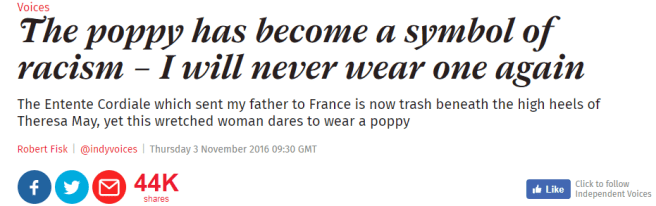
It is almost as if there is a hierarchy of suffering and this mindset contributes towards the acceptance of continuous war today. The most important message that I wish to portray is my despair surrounding the evil that is war and the pain it inflicts on us all. If the red poppy does not above all symbolise this, I cannot wear one. I shouldn’t have to try and ‘find’ a mention of such a significant aspect of war beyond ‘our’ soldiers and ‘our’ people. I didn’t come across anything mentioning ‘the others’. When do we ever hear about ‘the others’? And amidst all the sorrow when looking back is there ever regret? Does the red poppy acknowledge the disgraceful truth of war?
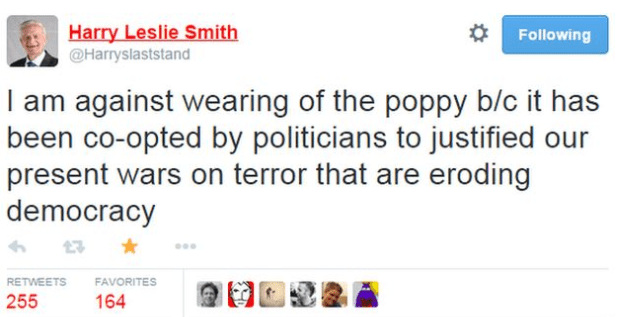
 Another reason I have chosen not to wear a red poppy is due to the ‘poppy fascism‘ that I mentioned earlier. Jon Snow coined the phrase in his blog post back in 2006 in response to the public backlash in him choosing not to wear a red poppy during broadcasting. This outrage has appeared in news time and time again in recent years, with Barbara Windsor famously claiming that those who choose not to wear a poppy can “sod off” for all she cares. To me, this sort of ridiculous comment paired with countless public figures who choose not to wear a poppy being shunned will only coerce people into wearing the red poppy as a “me-too” badge out of fear for the response they may get from doing otherwise. I believe that a true mark of respect depends solely on its authenticity. People should feel free to remember and mourn in a way that is true to them. Not everyone will do this publicly or through political symbols and gimmicks. Although I am very much questioning the use of the red poppy in this blog post, I do not think that people should not wear one if it genuinely means something to them.
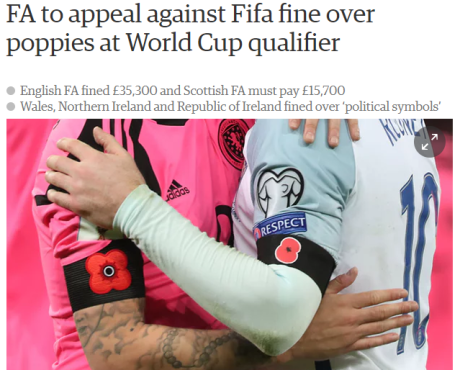
I can almost accept the wearing of a red poppy as a symbol of everything I have expressed disdain for thus far over wearing it because you think you ‘should’. For my generation, I believe most people wear the red poppy because they have seen others doing so, conclude that it is just ‘what we do’, or are told it is the ‘right thing to do’, and haven’t really thought to question it. For some, the red poppy becomes a strong, family tradition due to personal connections to war. For others, there aren’t really strong feelings about it one way or another.
As the years go by I can see why people may start to get desensitised towards the whole thing; war has been made to feel like a normal part of life. It’s unfortunate that something that originally had a positive message is being dished out in bulk to organisations like the BBC to be pinned on to jackets and worn by people as a nationally recognised symbol of respect, despite it not necessarily being their choice. As John Walsh wrote for The Independent in 2014: “Are these subtle and affecting displays of feeling? Or has Remembrance Day now turned into a variant of Red Nose Day, when everyone is encouraged to ‘Do something funny for money,’ and those who don’t join in are deemed to be tightwads and spoilsports?” Just look at the obscene and expensive variations of the red poppy that are now on offer, ranging from 100% organic wool to diamante-encrusted pieces (of which it is unclear where the profits are ending up).
For me, it is important to wear something rather than nothing, although I respect all those that choose not to wear a poppy in the confidence that it does not define their beliefs. I’m a statement sort of person, donning t-shirts with phrases such as “Godless Commie Scum” and “LEAVE HER TITS ALONE” (which is a vegan message referring to cow udders, in case you were wondering). If there is ever an opportunity for me to make a political statement I will jump at the chance. Alongside activities such as blogging, it’s a way to get my voice heard. I want people to know that I think and care deeply about these things, that I will stand up for what I think is right and fight injustice. And so for these reasons, I wear an alternative.
I choose to wear a white poppy in November and have done so for as long as I can remember. These alternative symbols were created by the Co-operative Women’s Guild and supported by the Peace Pledge Union in 1934 as a message of anti-war. The white poppy has gained momentum recently, often being worn alongside or instead of the red poppy (which has caused a fair amount of controversy). The PPU website states that:

“White poppies recall all victims of all wars, including victims of wars that are still being fought. This includes people of all nationalities. It includes both civilians and members of armed forces. Today, over 90% of people killed in warfare are civilians. In wearing white poppies, we remember all those killed in war, all those wounded in body or mind, the millions who have been made sick or homeless by war and the families and communities torn apart. We also remember those killed or imprisoned for refusing to fight and resisting war. We want to remember British military dead, but they are not the only victims of war. We also remember, for example, civilians killed in the bombings of London, Coventry and Belfast, and in the bombings of Dresden, Hiroshima, Baghdad and Kabul. From economic reliance on arms sales to renewing and updating all types of weapons, the UK government contributes significantly to international instability. The outcome of recent military adventures highlights their ineffectiveness and grim consequences.”
I wear my white poppy as a call for peace and in remembrance of all the soldiers and noncombatants who have suffered by the orders of the rich and powerful, safe in their ivory towers as they pull only the metaphorical triggers of war. The red poppy has come to represent a glorification or justification of war for many people, as well as failing to represent remembrance of the countless victims that have suffered without guns, without choices. In the end, what you wear or do not wear should come down to a meaningful decision you have made in consideration of the political message each colour poppy represents, which is quite simply unavoidable. Whatever poppy we wear or do not wear, our enemy in the fight against injustice and suffering is not one another.
If you would like to donate to purchase your own white poppy, click here.
Or to read more about the PPU, click here.
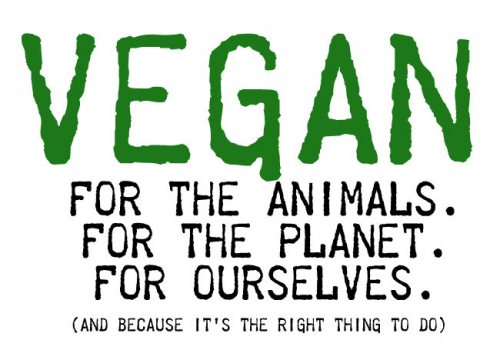

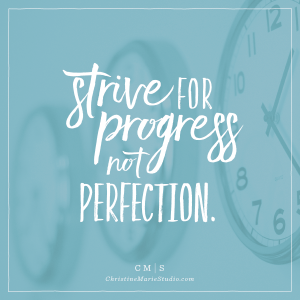 I regret that text for so many reasons, but mainly because I have realised that a change in lifestyle is about intention rather than perfection. If a person wants to make a stand for animal rights based on their own values and beliefs, a change in diet for example is a step in the right direction for them. At least this girl was doing something, you know? And that is admirable, I realise this now. It is very difficult to give up meat in a western society where it is constantly promoted. So kudos to her, and all the other vegetarians that I have most likely offended in the past. You are all making positive change. It’s very similar to the pacifism or communism argument people have. “Well it’s a nice idea in theory, but it won’t actually happen and I can’t make a difference“. If we all have the attitude that our contribution to change, however small, won’t mean anything, then of course we won’t move forward as a society! Anyone that has made an active choice to change something about their lifestyle, be it choosing not to purchase products from Nestlé (click
  My opinion has changed so drastically in the last few weeks and I think it’s important for me to share this in the hope that it will give people something to think about – especially those like me who have been quick to critique others who are contributing in any way towards making the world a better place. Could it have been denial? Jealousy? I don’t know. The girl I mentioned before is doing a great thing in her vegetarianism, but she, myself and all the others in whatever lifestyle they lead, have to stop judging and comparing others. To me, in that situation a few months ago, the vegetarian girl wasn’t doing ‘enough’. To an elderly vegan who hasn’t been near an animal product in food or otherwise since the womb, I might not be doing ‘enough’. 100% vegan is almost like the holy grail of lifestyle choices to me. It is so pure and so intense that it is very difficult to achieve, especially if you have been brought up in a family of meat and dairy eaters and are surrounded by ambiguous products containing these 6-syllable ingredients that make no sense.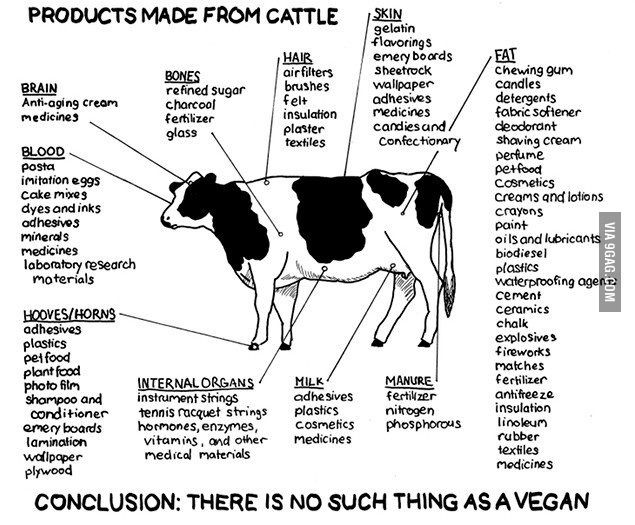







 Everyone has at least once threatened to delete Facebook. I am guilty of this many a time; I’d probably add a few embarrassing screenshots of the status updates I’ve made in the past claiming I’ll be gone for good if I hadn’t deleted them upon my begrudging return to cover my tracks each time. I don’t have Instagram or Snapchat and my Twitter account was set up by a friend of mine as another platform for plugging my blog posts which I don’t even think I remember the password for and could never get my head around using. If I did eventually delete Facebook, that’d be it for me and social media. And my god, isn’t it hard to cut all ties like that in this modern networking world?
 As I’m sure is the case for all of us, I cannot deny that I haven’t spent many an hour doing what has been affectionately labelled as ‘Facebook-stalking’ people. Sometimes your self-esteem is so low that you can dedicate a whole day to lying in bed in your pyjamas, clicking through people’s pictures and sighing at how wonderful their lives and/or faces are. Facebook use inadvertently involves judging and being judged – although everything we post is ‘fake’ anyway. We post what we want people to know and allude to what we want people to think. Everything you see on Facebook, for those reasons, are like the filters people use on their pictures. We post what we want people to see about ourselves, and the rest is obsolete.





 ciretta.com